Customs · September 24, 2026 · 7 min read · Last updated November 17, 2026
Dropshipping Customs, VAT and Duties in 2026: US, EU and UK
Low-value parcels from China lost most of their tax breaks in the last twelve months. Here is what changed in the US, the EU and the UK, and how to price it into your store.
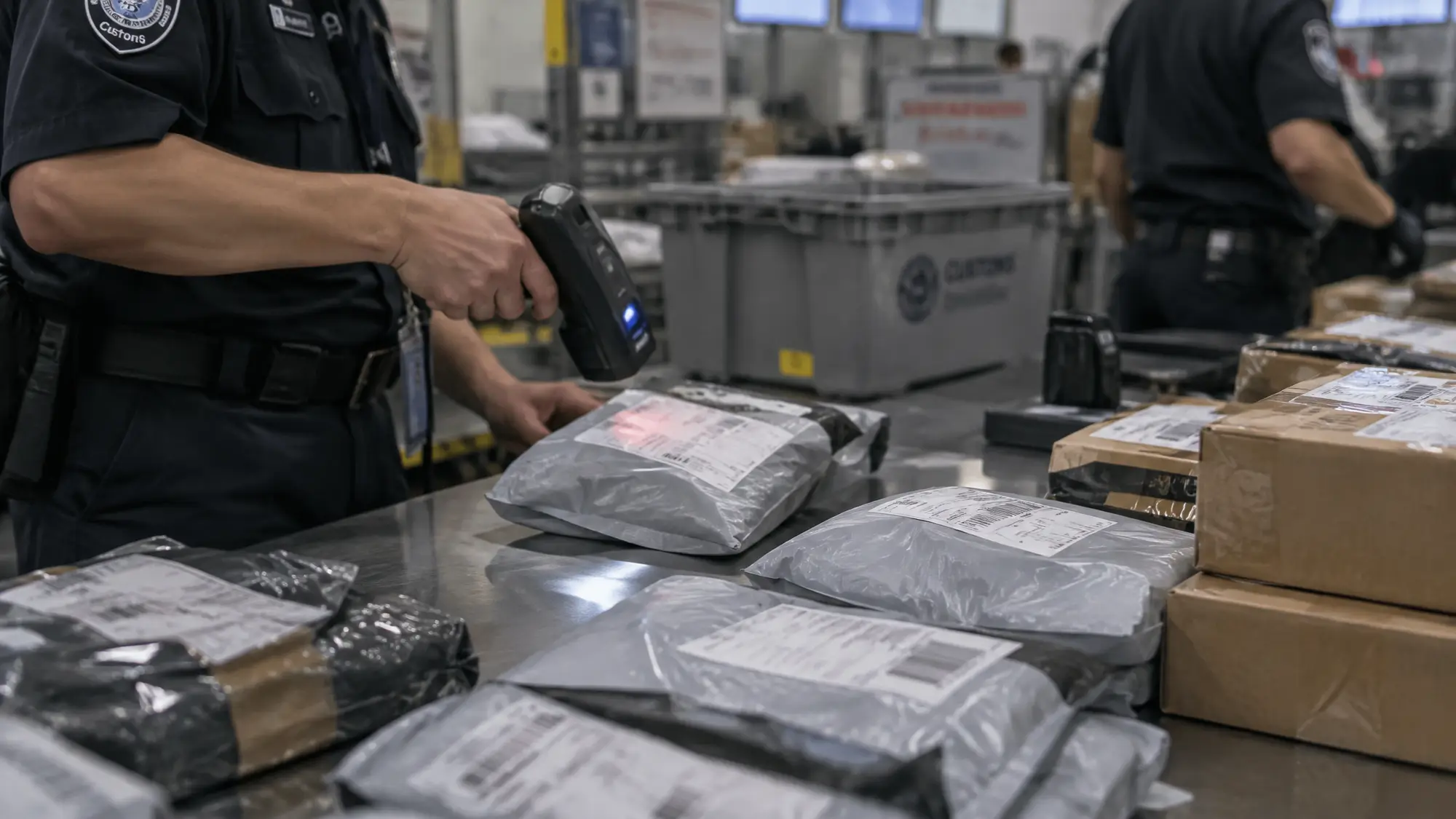
For years, a cheap parcel from China could land in a customer’s mailbox without anyone paying import duty. That window has mostly closed. The US suspended its $800 de minimis exemption, the EU started charging duty on parcels under €150, and the UK has set a date to scrap its own duty relief.
If you run a dropshipping store or a small brand, this changes your margins, your checkout and the number of angry “why do I have to pay the postman?” emails you get. Below is what applies right now, market by market, with the dates that matter.
United States: no more $800 de minimis
Until August 2025, a shipment worth $800 or less could enter the US duty-free. Executive Order 14324 suspended that exemption for all countries from 29 August 2025. Since then, low-value shipments are subject to all applicable duties, taxes and fees, whatever their value, and non-postal shipments must be entered by a party qualified to make entry.
On 24 June 2026, US Customs and Border Protection (CBP) published rules that make the suspension indefinite, one for mail shipments with a new postal informal entry process and one for all other modes such as express couriers. The One Big Beautiful Bill Act also repeals the de minimis privilege for commercial shipments by law from 1 July 2027, so do not plan around it coming back.
How much duty will you pay?
That depends on the product’s HS code and on tariff decisions that have shifted a lot this year. On 20 February 2026 the Supreme Court ruled that IEEPA does not authorise the President to impose tariffs, and those tariffs were replaced by a temporary 10% surcharge under Section 122. That surcharge expired on 24 July 2026 and new Section 301 duties took over the same day, at 12.5% for Chinese goods on top of the Section 301 tariffs already in place.
Get the HS code right for every SKU. It drives the rate, and a wrong code is the fastest way to a delayed or seized parcel.
Declare the real value. The One Big Beautiful Bill Act added civil penalties for misuse of the de minimis entry process, and undervaluing is exactly what customs looks for.
Build duty into your product price or shipping fee instead of hoping the customer will absorb it.
European Union: IOSS plus a new €3 duty per item
Two separate things apply to a parcel sent to an EU customer: VAT and customs duty.
VAT and the IOSS
Since July 2021, all goods imported into the EU pay VAT from the first euro. For consignments worth up to €150, sellers can use the Import One-Stop Shop (IOSS): you charge the customer’s local VAT at checkout, declare it monthly through one registration, and the parcel clears without the customer paying anything on delivery. A seller established outside the EU has to appoint an EU-based intermediary to use the IOSS.
Without IOSS, VAT is collected at import. In practice the carrier usually asks the customer to pay it, often with a handling charge on top, before handing over the parcel. That is where refused deliveries and bad reviews come from.
The end of the €150 duty exemption
Parcels under €150 used to be exempt from customs duty. From 1 July 2026, the EU charges a temporary flat customs duty of €3 per item on low-value parcels from outside the EU. It applies to consignments up to €150 sold at a distance, whether VAT is handled through the IOSS, the special arrangements or the standard procedure, and it runs until 1 July 2028, when normal duty rates by product take over.
“Per item” means per tariff classification, not per unit. The Commission’s own examples: five T-shirts in one parcel pay €3, while one T-shirt and one watch pay €6. The declarant (the seller, the IOSS holder or the importer’s representative) is responsible for declaring and paying it.
Handling fees on top
Since 1 November 2026 the EU also charges a union-wide handling fee of €2 per item on parcels sold at a distance, to cover customs processing costs. It is a fee, not a duty, and it comes on top of the €3. France had its own €2 tax on low-value parcels from 1 March 2026 but suspended it from 1 July 2026 so it would not stack with the EU duty.
United Kingdom: VAT at checkout, duty relief ending
For consignments worth £135 or less, the seller charges UK VAT at the point of sale and must be registered for UK VAT. If you sell through an online marketplace, the marketplace generally takes on that responsibility instead. Above £135, import VAT and any customs duty are paid at the border.
Today, goods in consignments of £135 or less are also relieved from customs duty. The government announced at Budget 2025 that this relief will go. It first pointed to March 2029, then in July 2026 brought the deadline forward: the change will apply from a date set by regulations, by October 2028 at the latest. The reform also introduces UK-based fiscal representatives who share liability for overseas sellers’ customs debts.
DDP vs DDU: who pays at the door?
These two terms decide whether your customer gets a clean delivery or a bill. Strictly speaking, DDU was retired from the official Incoterms years ago and replaced by DAP (Delivered at Place), but most logistics providers still say DDU, and the meaning is the same.
DDP (Delivered Duty Paid)
DDU / DAP (Duty Unpaid)
Who pays duty and import VAT
You, the seller, before delivery
The customer, on delivery
Price shown at checkout
Final price, no surprises
Taxes and carrier fees may come later
Customer experience
Parcel arrives like a local order
Payment request, delays, possible refusal
Your cost per order
Higher, but predictable
Lower upfront, higher refund risk
Best for
Stores selling to consumers in the US, EU and UK
B2B or high-value orders where buyers expect it
Swipe sideways to see the whole table
For a dropshipping store, DDP is almost always the right call. A customer who ordered a €25 product will not happily pay VAT plus a carrier fee to get it, and a refused parcel costs you the product, the shipping and often a chargeback.
What to do this week
List your top 20 SKUs with their HS codes and real unit values.
Check which markets you sell to and whether you have IOSS (EU) and UK VAT registration in place, directly or through your marketplace.
Recalculate landed cost per order: product, shipping, duty, VAT and any per-item or handling fee.
Switch to DDP shipping for consumer orders and show taxes as included at checkout.
Group products smartly. In the EU, several units of the same product in one parcel pay one €3 duty, not one per unit.
Set a reminder to review the rules every quarter. The UK reform still has no firm date, and the EU flat duty ends on 1 July 2028.
How Jindouyun handles customs
At Jindouyun we ship from our Shenzhen warehouse on air express lines with DDP options to the US, the EU and the UK, and we support IOSS for EU orders so your customers are not asked to pay at the door. We check HS codes and declared values with you before the first shipment, and orders are packed the same day, typically arriving in 5 to 10 days in the US and EU. If you want a landed-cost estimate for your products, send us your list and we will come back with a quote within 24 hours.