Private Label Dropshipping: How to Build Your Own Brand
Private label dropshipping means selling a product made for you, under your own brand, while a partner still stores and ships each order. Here is how to do it without betting your savings on the first batch.
Private label dropshipping means you sell a product that a factory produces with your brand name, logo and packaging, while a partner in China stores it and ships each order to your customers. You keep the no-warehouse model of dropshipping, but the product is yours: competitors can’t buy the exact same item and undercut you on price.
It is the natural step after you have found a product that sells. This guide explains how private label differs from generic and white label dropshipping, what it really costs, the legal basics (trademarks and product safety) and a practical launch plan for a small store.
What is private label dropshipping?
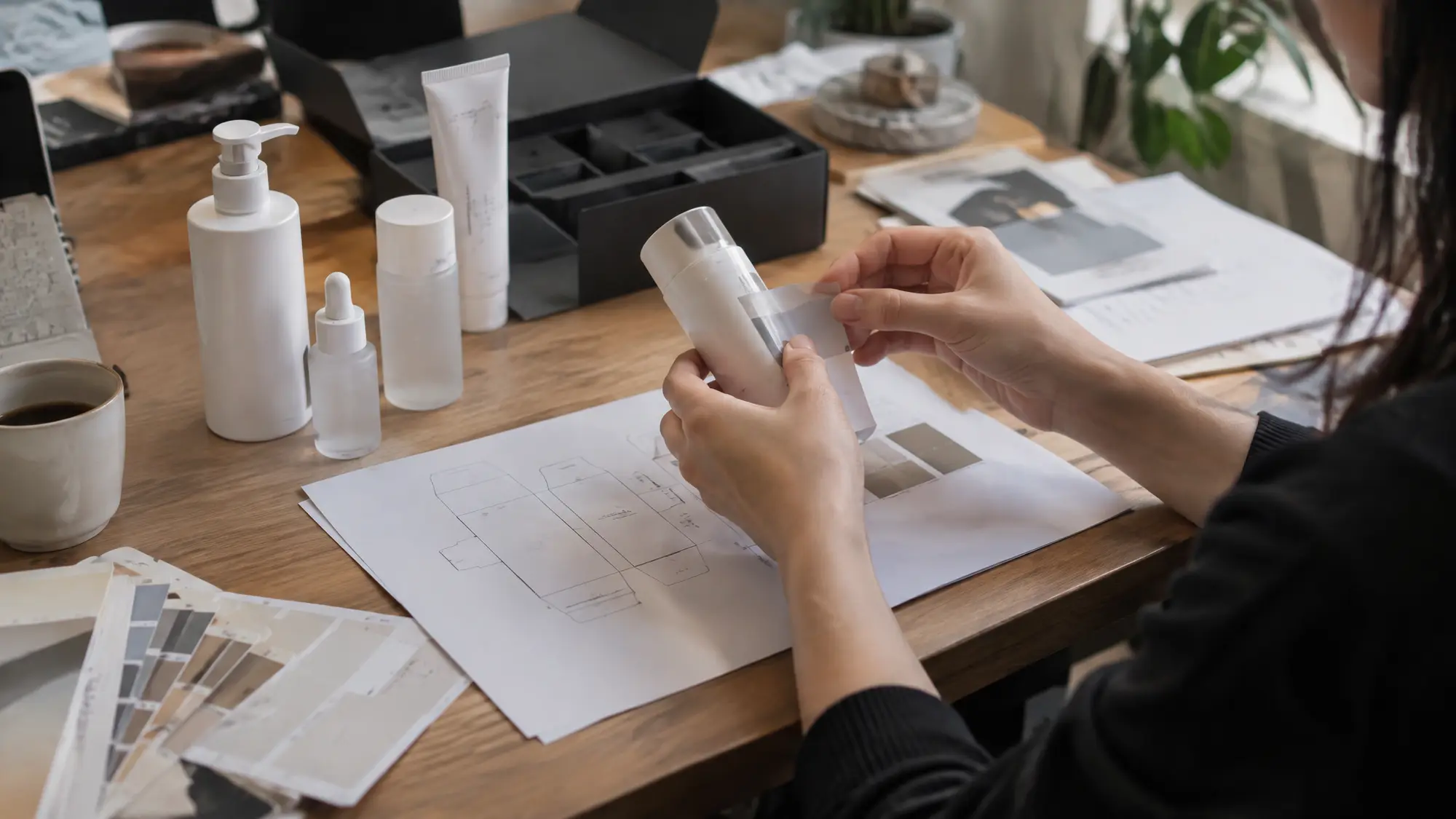
A private label product is made by a manufacturer but sold exclusively under your brand. In practice that ranges from a logo and custom box on an existing design to a product modified to your specifications: a different color, a better battery, a new accessory in the set. The factory produces a batch, your agent receives it, checks it and ships single orders as they come in from your store.
The difference from classic dropshipping is ownership. With generic dropshipping you list a product that hundreds of stores sell from the same supplier listing. With private label, the product, the brand and the customer relationship belong to you. That makes repeat purchases, higher prices and better ad performance possible, but it also means you now pay for inventory up front.
How is private label different from generic and white label dropshipping?
The three models are often mixed up. The short version: generic is someone else’s product, white label is a standard product with your logo, private label is a product made for you. We cover the nuances in white label vs private label.
Generic dropshipping
White label
Private label
Product
Supplier’s standard item
Standard item, your logo
Item made or modified for you
Upfront stock
None
Small batch
Batch at the factory MOQ
Exclusivity
None
Low (others sell the same base)
High
Pricing power
Low, price wars
Medium
High
Time to launch
Days
2 to 4 weeks
4 to 10 weeks
Main risk
Copycats, thin margins
Easy to compare
Unsold inventory
Swipe sideways to see the whole table
When should you switch to private label?
Private label is a tool for scaling a proven product, not for testing ideas. The right moment is usually when three things are true:
You have steady sales on one product for several weeks, not a single good weekend.
Competitors are copying your ads or undercutting your price on the same supplier item.
Customer reviews or refund reasons point to something you could improve (a weak clasp, a short cable, a vague manual).
If you are not there yet, keep testing with generic stock and read how to validate a product before ordering stock. Branding a product nobody wants just makes an expensive version of the same problem.
How to start private label dropshipping, step by step
Pick the winning product and write down exactly what you want to change: logo placement, colors, materials, accessories, packaging, manual language.
Ask your sourcing agent to find two or three factories (not trading companies) that make this item and accept customization. Factories that do OEM work build to your design; ODM factories let you brand and adapt their existing designs, which is cheaper for a first run.
Order branded samples and test them like a customer: use, wash, drop, charge. See our guide to ordering product samples from China.
Approve a golden sample and a written spec sheet. This is the reference for every future batch.
Place a first production order sized for four to eight weeks of sales, not six months.
Run a pre-shipment inspection when the goods reach the warehouse, then connect your store so orders ship automatically with your branded packaging.
How much does private label dropshipping cost?
Costs vary a lot by product, so treat the figures below as an illustrative example for a small accessory, not a quote. The point is to see which lines exist and which ones you pay before the first sale.
Cost line
When you pay
Illustrative example
Branded samples and express shipping
Before production
Around $60 to $150
Logo mold, plate or setup fee
Before production
Often $0 to $200, sometimes waived above a quantity
First batch (e.g. 300 units)
Deposit before, balance before shipping
Unit cost × quantity, often slightly above the generic version
Custom boxes or inserts
Before production
Depends on print and size, extra MOQ may apply
Quality control
When goods arrive
Per batch or per hour
Storage
Monthly while stock sits
Per unit, pallet or cubic meter
Pick, pack and air shipping
Per order
Same logic as normal dropshipping
Swipe sideways to see the whole table
Before you commit, plug your new unit cost, shipping and ad cost into a profit margin calculator. Branding usually raises your cost per unit a little, so the business case only works if it also lets you raise your price or lower your refund rate.
Do you need a trademark for a private label brand?
You can sell without a registered trademark, but registering one protects your name against copycats and is required for some marketplace brand programs. Check that the name is free in each market before you print thousands of boxes. A few practical points:
In the US, the USPTO states that applicants based outside the United States must be represented by a US-licensed attorney.
In the EU, one EU trade mark covers all member states; national offices such as INPI in France cover a single country and are cheaper.
Register the classes that match what you actually sell. A phone accessory brand does not need clothing classes on day one.
Buy the matching domain and social handles at the same time.
What compliance rules apply to private label products?
Putting your brand on a product changes your legal position. In the EU, the General Product Safety Regulation (EU) 2023/988 has applied since 13 December 2024: products sold to EU consumers need an economic operator established in the EU who is responsible for safety, and the product or its packaging must identify the manufacturer and that operator. When your brand is on the box, authorities can treat you as the manufacturer.
Make sure the product carries a type, batch or model number and your contact details, and that the EU responsible person is named where required.
Check sector rules: electronics, toys and cosmetics have their own requirements such as CE marking.
Keep test reports and your spec sheet on file. You will need them if a marketplace or authority asks.
For US sales, low-value parcels have paid duties since the de minimis exemption was suspended on 29 August 2025, so include duties in your landed cost.
What are the most common private label mistakes?
Branding before validating. The product needs proven demand first.
Ordering six months of stock to get a lower unit price, then being stuck when the trend fades.
Choosing a trading company that resells the factory’s work and loses control of quality.
Designing packaging that adds weight or volume and pushes up air shipping costs through volumetric weight.
Skipping inspection on the first batch because the sample was fine. Samples are made with extra care; production runs are where problems show up, which is why a quality control checklist matters.
Your next step
Take your best-selling product and write the one-page spec: what changes, what stays, which packaging, which markets. Then ask your agent for branded samples from two factories and compare them side by side. At Jindouyun Fulfillment we handle this kind of first private label run from our Shenzhen warehouse, with sampling, photo QC and branded packing, for shops doing 5 to 10 orders a day or more, depending on average order value. Whoever you work with, start small, measure refunds and reorder rates, then scale the batch size.
FAQ
Is private label dropshipping profitable?
It can be more profitable than generic dropshipping because you control the price and competitors cannot sell the identical product. The trade-off is inventory risk: you pay for a batch before selling. It is profitable when the product already sells well and branding lets you charge more or cut refunds enough to cover the extra costs.
How many units do I need to start a private label product?
It depends on the factory and the level of customization. A logo print on a stock design can start from a few hundred units, sometimes less, while a fully custom product may need a thousand or more. Size your first order for roughly four to eight weeks of sales and negotiate the MOQ down where possible.
Can I do private label dropshipping without holding inventory myself?
Yes. The stock sits in your agent’s or fulfillment partner’s warehouse in China, and each order is picked, packed in your branded packaging and sent by air to the customer. You own the inventory financially, but you never store or handle it. Your store syncs orders automatically with the warehouse.
Do I need a company to start a private label brand?
Most payment processors, marketplaces and trademark offices expect a registered business, and EU product safety rules require identifiable contact details on the product. A simple structure such as a sole proprietorship is often enough to start. Check the rules in your country and talk to an accountant before your first production order.