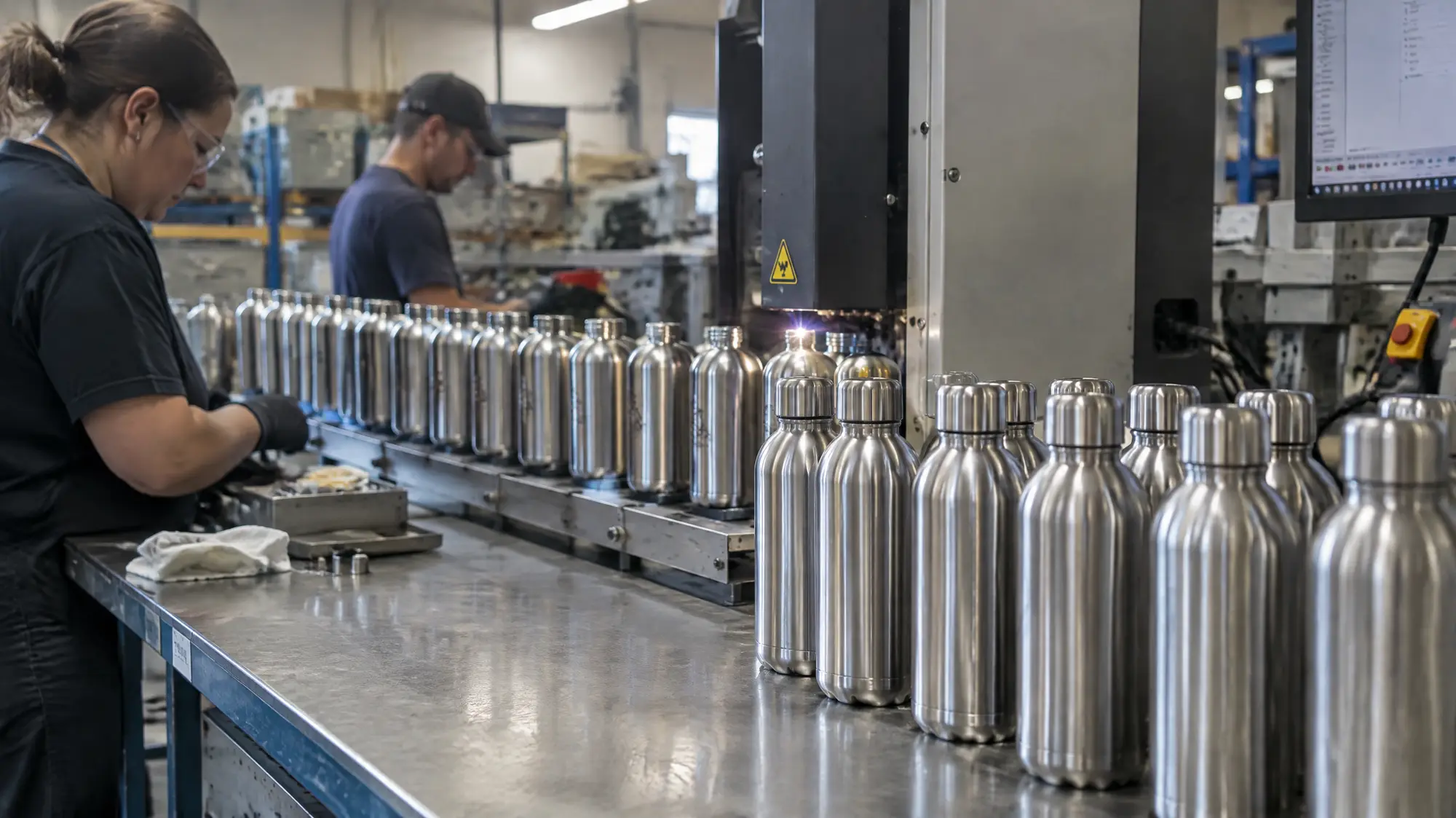
White Label vs Private Label: Which Is Right for You?
White label puts your logo on a product anyone can buy. Private label gives you a product made for you. Here is how the two compare on cost, risk and brand value, and which one fits your store today.
White label vs private label comes down to one question: is the product itself yours? White label is a standard product that the manufacturer sells to many brands, each adding its own logo. Private label is a product made or modified for you alone, sold only under your brand. White label is faster and cheaper to start; private label costs more but is much harder to copy.
Both are ways to move beyond generic dropshipping, and many stores use one after the other. This guide compares them on cost, minimum orders, exclusivity, legal responsibility and risk, then gives a simple rule for choosing.
What is the difference between white label and private label?
White label
Private label
What you get
Factory’s standard product with your logo
Product built or modified to your spec
Who else sells it
Any brand that buys from the same factory
Only you
Design control
Logo, colors from a menu, packaging
Materials, features, design, packaging
Typical minimum order
Low
Higher, set by the factory
Time to launch
Around 2 to 4 weeks
Around 4 to 10 weeks
Upfront cost
Low to medium
Medium to high
Copy risk
High, competitors can buy the same base
Low
Pricing power
Medium
High
Swipe sideways to see the whole table
In China, factories often describe the same idea with other words. White label is close to buying an ODM product (their design, your brand). Full private label often means OEM work, where the factory manufactures your design. Always confirm what exactly is being customized before you pay.
What is white label?
A white label product is a finished item that a manufacturer sells unbranded so that other companies can put their name on it. Think phone cases, silicone kitchen tools, LED strips, supplements or skincare from a standard formula. You choose from what exists, add a logo on the product or packaging, and sell.
Pros: quick to launch, low minimums, the product is already tested in the market, easy to switch supplier.
Cons: competitors can buy the identical item, so customers can compare prices; you have little control over quality changes the factory makes.
Best for: stores testing a brand identity, accessories, consumables, fast trend products.
What is private label?
A private label product is manufactured for one brand. The change can be small (a new color, an extra accessory, a better material) or deep (your own design and mold). The factory agrees not to sell that version to others, ideally in writing. Our full private label dropshipping guide walks through the launch process.
Pros: real exclusivity, room to fix the weaknesses customers complain about, higher prices, a brand that can grow into other products.
Cons: higher minimum orders, longer lead times, more money tied up in stock, more responsibility for compliance.
Best for: proven products with steady sales, stores building a long-term brand, products where competitors are copying you.
White label vs private label: which costs more?
Private label nearly always costs more up front. The table shows an illustrative example for a small gadget with a first run of 300 units. Your figures will differ; the useful part is the structure.
Cost item
White label (illustrative)
Private label (illustrative)
Unit cost
$4.00
$4.60 (better material, custom color)
Logo or setup fee
$0 to $50
$100 to $300 (mold changes, color matching)
Samples
1 round
2 to 3 rounds
Minimum order
100 to 300 units
500 to 1,000 units
Cash tied up before first sale
Around $500 to $1,300
Around $2,500 to $5,000
Swipe sideways to see the whole table
What matters is the full landed cost per unit: product, packaging, storage, air shipping, and duties where they apply. Since 29 August 2025 US low-value parcels pay duties, and EU parcels up to €150 now carry a temporary €3 duty per item category, so run both scenarios in the profit margin calculator before deciding.
Which is better for dropshipping?
Neither is better in general. A simple rule based on where your store is:
Still testing products? Stay generic. Branding a product before you know it sells wastes money.
One product selling steadily, budget for a few hundred units? Go white label: logo, custom packaging, insert card.
Proven product, competitors copying you, clear improvement ideas from reviews? Go private label.
Selling consumables or accessories with many variants? White label often stays the smarter choice long term.
Selling something where quality differences are visible (bags, jewelry, tools)? Private label pays off faster.
Minimum order quantity is often the deciding factor. If a factory’s MOQ for a custom version is too high, negotiate first: our guide on how to lower MOQs as a small seller covers the usual levers.
Who is legally responsible for the product?
In both models, your brand is on the product, and that changes your position. Under the EU General Product Safety Regulation (EU) 2023/988, which has applied since 13 December 2024, whoever places their name or trademark on a product can be treated as its manufacturer, and products sold to EU consumers need an economic operator established in the EU. That applies to white label as much as private label.
Ask the factory for test reports and certificates that match the exact version you buy.
Make sure labels show a model or batch number and your contact details.
Register your trademark if the brand matters to you; in the US, applicants based abroad must use a US-licensed attorney.
For private label, put exclusivity and design ownership in a written agreement with the factory.
How to move from white label to private label
Launch white label on your best product and collect reviews and refund reasons for a few weeks.
List the three changes customers would notice most.
Ask the same factory (and one alternative) to quote those changes and the new minimum order.
Order samples of the modified version and compare them with the white label unit.
Switch when you have cash for the new batch and your current stock is running low, so you never hold both.
What to do next
Write down your current monthly sales on your best product and the cash you can tie up in stock. If it covers a few hundred units, request white label quotes and samples this week. If you are thinking of a wider brand, read branded dropshipping vs general store first. At Jindouyun Fulfillment we source both models, handle samples and QC and ship branded orders from Shenzhen, for shops doing 5 to 10 orders a day or more, depending on average order value.
FAQ
Is white labeling the same as private labeling?
No. Both let you sell under your brand, but white label is a standard product sold to many brands with only the logo and packaging changed. Private label is a product made or modified for one brand only. People often use the terms interchangeably, so always confirm with the supplier what is actually customized and whether the version is exclusive.
Which is cheaper, white label or private label?
White label is cheaper to start: lower minimum orders, fewer sample rounds and small or no setup fees. Private label usually has a slightly higher unit cost and requires a larger first batch, so more cash is tied up. Over time, private label can be more profitable because you can charge more and face fewer direct price comparisons.
Can I dropship white label products?
Yes. You buy a small batch with your logo, your agent stores it in China and ships each order by air as it comes in, usually in your branded packaging. This is one of the most common first steps for dropshippers who want a brand without the minimum order and lead time of a fully custom product.
Do I need a trademark for white label products?
It is not required to sell, but it is strongly recommended once you invest in a brand. A trademark stops others from using your name and is needed for some marketplace brand programs. Remember that it protects the name and logo, not the product design, which competitors can still buy in white label form.