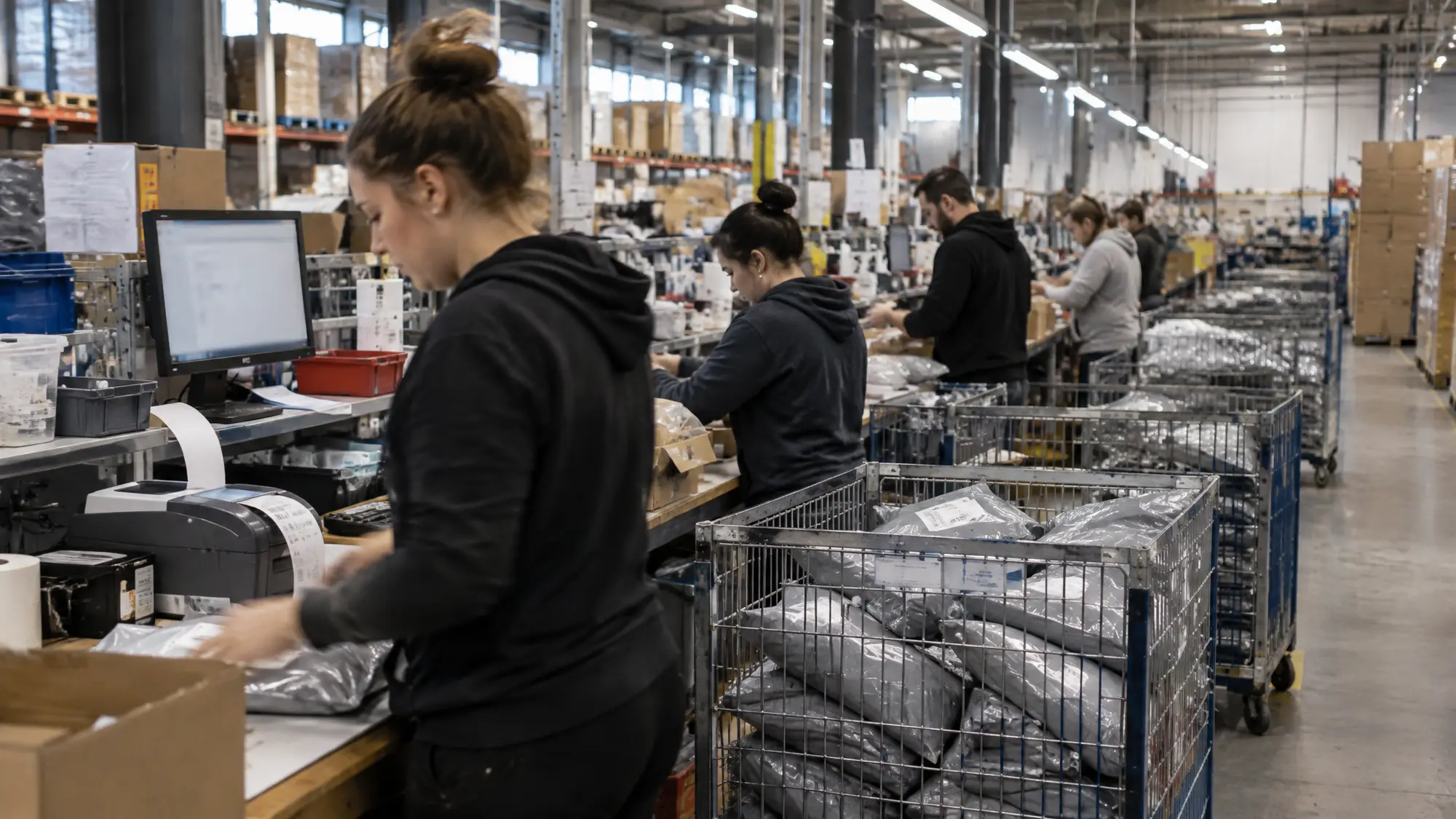
Dropshipping Processing Time: How to Cut It to 1 or 2 Days
Customers don’t see “processing” and “shipping” separately: they see how long it takes to get their parcel. Processing time is the part you can control most. Here is how to shrink it.
Dropshipping processing time is the time between a customer placing an order and the parcel being handed to the carrier. With AliExpress-style suppliers it often takes 3 to 7 days; with stock already sitting in an agent’s warehouse and automatic order sync, it can drop to 1 to 2 days. It is usually the easiest part of total delivery time to reduce.
This guide explains where processing time comes from, what platforms like Shopify and TikTok Shop expect, and eight practical changes that get orders out the door faster without paying for faster shipping lines.
What is processing time in dropshipping?
Shopify defines fulfillment or processing time as the time between an order being placed and the business fulfilling it, which for shipped goods means handing the parcel to a carrier. It is separate from transit time, the time the carrier needs to deliver. Customers experience the sum of both.
Stage
What happens
Typical delay when it goes wrong
Order sync
Order reaches the supplier or agent
Hours to days if done manually
Purchasing
Supplier buys or produces the item
1 to 5 days if no stock is held
Warehouse receiving and QC
Item arrives and is checked
1 to 2 days
Pick and pack
Item is picked, packed, labeled
Hours to 1 day
Handover to carrier
First carrier scan, tracking goes live
1 to 2 days if pickups are infrequent
Swipe sideways to see the whole table
Most of the delay sits in the first two rows. If nobody holds stock, every order waits for someone to buy the product before anything else can happen.
Why is your dropshipping processing time so long?
No stock held: the supplier buys from another supplier after your order arrives.
Manual orders: you or a VA place orders in batches once or twice a day, or less at weekends.
Multi-supplier orders: one customer order with items from two sellers waits for the slowest one.
Out-of-stock variants discovered only after the order is placed.
Weekend and holiday gaps, especially around Chinese public holidays.
Late carrier pickups, so packed parcels sit for a day without a first scan.
How to reduce dropshipping processing time
Hold stock of your bestsellers. Even two to four weeks of inventory at your agent’s warehouse removes the purchasing step. Our guide on how much inventory to buy shows how to size it.
Consolidate suppliers. Source all items in a typical order through one agent so multi-item orders ship together.
Set a daily cut-off. Ask your warehouse for its cut-off time (for example, orders received before a set hour in China time ship the same day) and plan around it.
Pre-pack kits and bundles. If you sell sets, assemble them in advance so pick and pack is a single step.
Run QC at receiving, not per order. Inspect each batch when it arrives so orders don’t wait for checks.
Keep variant stock in sync. Map every variant to a warehouse SKU and hide variants that run out, to avoid orders stuck on backorder.
Monitor the first carrier scan. Track the time from order to first tracking number scan as your key metric, and ask why when it slips.
How do holidays and peak season affect processing time?
Even a well-run warehouse slows down at predictable moments. Planning for them is part of keeping processing short all year, not just on a normal Tuesday.
Chinese New Year: factories close for several weeks around the holiday (6 February in 2027), and some warehouse staff travel home. Orders shipped from stock can keep moving if your agent stays open, but anything that needs purchasing or production stops. Build stock before the closures.
Golden Week in early October and other Chinese public holidays: shorter closures, but carriers and factories run slower before and after.
Black Friday to Christmas: order volumes spike everywhere, air capacity gets tight and pickups can slip. Ask your warehouse about extra shifts and cut-off times well in advance.
Your own promotions: a big sale or a viral video can triple orders overnight. Tell your agent before you launch, so they can plan staff and check stock levels.
For each of these, update the processing time shown on your store temporarily rather than hoping orders go out on time. A clear message such as “orders placed this week ship within 3 business days” prevents many support tickets.
What processing time do Shopify and TikTok Shop expect?
Platforms increasingly measure how fast you ship, not just whether you deliver.
Shopify lets you set an order processing time in Settings > Shipping and delivery, used to calculate delivery dates shown to customers. Set it to what you can actually achieve.
TikTok Shop (US) requires regular orders to be marked In Transit within 2 business days of the order date, unless a custom handling time applies. If your late dispatch rate goes above 10%, the account can face penalties such as health rating deductions or order limits. Our TikTok Shop fulfillment guide goes further.
In the US, the FTC’s Mail Order Rule requires a reasonable basis for any shipping time you advertise. If you can’t ship on time, you must notify the customer and offer the choice to cancel for a full refund.
Policies change regularly, so check the current rules in each platform’s seller center for your country.
How to communicate processing time to customers
Honest expectations prevent more tickets than fast shipping does. Show processing and delivery separately on product pages and in your shipping policy, for example “ships within 1 to 2 business days, delivered in around 7 to 12 business days”. Send the tracking link as soon as the first scan appears, and explain that tracking can take a day or two to update after handover. When tracking stalls, our guide on a tracking number not updating explains what is normal.
What to do next
Export your last 100 orders and calculate the average time from order to first scan. If it is above two days, start with the first two steps: hold stock of your top product and automate order sync. At Jindouyun Fulfillment, orders sync automatically from Shopify to our Shenzhen warehouse, and stocked items are packed from the shelf, which is what keeps processing short.
FAQ
What is a good processing time for dropshipping?
One to two business days is a good target and matches what many platforms expect. It is realistic when stock is held at your agent’s warehouse and orders sync automatically. Three to five days is common with suppliers who buy after each order, and anything longer usually means a sourcing or stock problem.
What is the difference between processing time and shipping time?
Processing time runs from the order until the parcel is handed to the carrier. Shipping time, or transit time, runs from that handover until delivery. Customers experience the total of both. Processing depends on your supplier and stock, while transit depends mainly on the carrier line and destination.
Why does my supplier take so long to ship?
Usually because they don’t hold the item in stock and have to buy it from another supplier after your order arrives, or because orders are processed in batches. Multi-item orders from different sellers, holidays and late carrier pickups add delays. Holding stock with an agent and automating orders removes most of these.
How do I set processing time on Shopify?
In your Shopify admin, go to Settings, then Shipping and delivery, and choose an order processing time or enter a custom value. Shopify uses it with transit times to estimate delivery dates. Set it to what your warehouse actually achieves, not your best case, and update it when your setup changes.